Sala Thai · Fish Sauce: Savory Depth in Small Measures
Fish Sauce: Savory Depth in Small Measures
Fish Sauce is easiest to understand when its main ingredient and its finishing details are considered together. In this version, a fermented seasoning used carefully to deepen savory flavor. That combination gives fish sauce its identity before any garnish is added. In fish sauce, the cook's aim is to let each part remain recognizable: one element creates the base, another provides aroma, and the last brightens the finish.
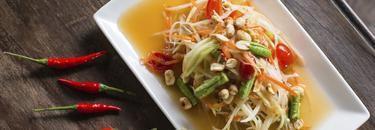
What makes Fish Sauce distinctive?
The texture is part of the appeal: salty, complex, and quiet when balanced with lime and sugar. With fish sauce, fragrance often arrives before the first bite, while a fermented seasoning used carefully to deepen savory flavor shape what follows. Notice whether papaya salad, stir-fried noodles, or a bright dipping sauce introduces a crisp edge or a softer contrast; the difference makes a useful guide to ordering a second plate.
The ingredients help place fish sauce within Thai cooking: a fermented seasoning used carefully to deepen savory flavor. For fish sauce, lime, aromatic leaves, chili, or a savory seasoning can shift the balance, but each should leave room for salty to come through. Consider how those choices sit beside papaya salad, stir-fried noodles, or a bright dipping sauce; their contrast is what makes this particular combination recognizable rather than a generic plate.
How Fish Sauce gets its flavor
Preparation helps preserve the qualities of fish sauce. A useful kitchen principle is adding a little at a time and tasting after every adjustment. Heat changes the moisture and aroma of a fermented seasoning used carefully to deepen savory flavor, so timing affects whether the final bite feels salty or flat. Careful sequencing lets the ingredients in fish sauce meet while preserving their distinct textures.
For a first taste of fish sauce, notice its aroma, its main texture, and the note that lingers after a bite. The clearest cue is salty, shaped in part by adding a little at a time and tasting after every adjustment. Try it alongside papaya salad, stir-fried noodles, or a bright dipping sauce and compare the way the two textures meet. That small comparison reveals why the ingredients in fish sauce work together.
Pairing Fish Sauce with a full meal
For a complete meal, pair fish sauce with papaya salad, stir-fried noodles, or a bright dipping sauce. That side contributes a texture or flavor that fish sauce does not already provide. A contrast to salty keeps each choice distinct, so let the accompaniment play its own role rather than adding another dish with the same sauce.
- Look for the characteristic ingredients: a fermented seasoning used carefully to deepen savory flavor.
- Choose a side that contrasts with the main texture, such as papaya salad, stir-fried noodles, or a bright dipping sauce.
- Taste fish sauce before adding extra lime, chili, or sauce.
- If ordering fish sauce to go, keep crisp toppings away from hot steam until serving.
To notice fish sauce in a finished meal, begin with papaya salad, stir-fried noodles, or a bright dipping sauce. That is a useful setting for understanding the savory note behind a balanced dish. Since a fermented seasoning used carefully to deepen savory flavor, the ingredient may add aroma or balance without being obvious in every bite. Ask whether it is included when that detail matters, and compare its contribution with salty in the dish.
One more thought about Fish Sauce
This guide to fish sauce illustrates the role each ingredient plays alongside salty, sour, sweet, and aromatic notes. It brings a fermented seasoning used carefully to deepen savory flavor into focus through adding a little at a time and tasting after every adjustment. Compare its salty character with papaya salad, stir-fried noodles, or a bright dipping sauce and notice which detail you remember most. That observation can guide your next choice, whether you return to fish sauce or follow another ingredient into a different dish.
A question about Fish Sauce
Does fish sauce make every dish taste fishy?
For fish sauce, begin with a fermented seasoning used carefully to deepen savory flavor; those ingredients help explain its salty finish. Does fish sauce make every dish taste fishy? The cooking approach—adding a little at a time and tasting after every adjustment—also affects what you notice. If you want a contrast at the table, try papaya salad, stir-fried noodles, or a bright dipping sauce; for a dietary preference, ask how this specific version is prepared before ordering.